Graphene dispersion
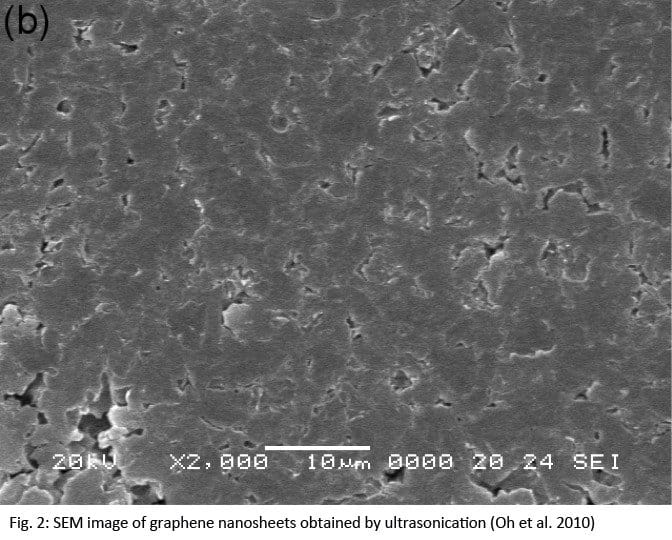
The degree of dispersion of graphene and graphene oxide is extremely important for utilizing the full potential of graphene and its specific properties. If graphene is not dispersed under controlled conditions, the polydispersity of the graphene dispersion, once incorporated into the device, can lead to unpredictable or non-ideal effects, as the properties of graphene vary with its structural parameters. Ultrasonic treatment is a proven treatment that reduces interlaminar forces and controls important processing parameters. "For graphene oxide (GO), which is usually stripped as a single-layer sheet, one of the major polydispersity challenges is due to the change in the lateral area of the sheet. By changing the graphite material and sonication conditions, the average lateral dimension of GO can be The 400 nm shift is to 20 μm. It has been demonstrated in many other studies that the ultrasonic dispersion of graphene can produce fine or even colloidal slurries.
Zhang et al (2010) have shown that by using ultrasonic waves, a stable graphene dispersion having a high concentration of 1 mg·mL-1 and a relatively pure graphene sheet can be obtained, and the prepared graphene sheet has 712 S·m. High conductivity of −1. Fourier transform infrared spectroscopy and Raman spectroscopy results show that the ultrasonic preparation method has less damage to the chemical and crystal structure of graphene.