


Ultrasonic Cutting Edge Sealing Machine

Shanghai Huashuo: Your Professional Ultrasonic Cutting Edge Sealing Machine Manufacturer!
Shanghai Huashuo Intelligent Equipment Co., Ltd. s a company specializing in the production and processing of automation machinery, mechanical accessories and other products. Our company has had technical exchanges and cooperation with many German-funded enterprises at the beginning of its establishment. By combining German advanced technology and scientific management mode, it has formed a complete R&D, assembly, testing, and marketing system.
Our Advantages
Various Products
Our company provides High Shear Disperser, Emulsifier, Homogenizer, Colloid mill, Powder-liquid mixer, Grinding machine, Vacuum Emulsifier, Ultrasonic Disperser, Ultrasonic Welding, Ultrasonic Cutting, Ultrasonic Homogenizer, Ultrasonic Emulsifier, Ultrasonic Transducer, Ultrasonic Generator, Ultrasonic Milling Machine.
Advanced Equipment
Our company has advanced production equipment including CNC lathe, CNC milling machine, Polytec laser doppler vibrometer and Resistance furnace temperature controller, which has a high level of automation and intelligence.
Product Application
Dye dispersion, food homogenization, ink dispersion, oil-water emulsification, graphene dispersion, graphene preparation, alumina dispersion, metal melt refinement, ultrasonic dispersion, ultrasonic homogenization, ultrasonic emulsification, non-woven fabric welding, PP/PE Welding and cutting, food cutting and processing, ultrasonic auxiliary equipment.
Integrated Process Technology
Our company provides customers with complete process technology solutions, ultrasonic welding, ultrasonic dispersion and other ultrasonic equipment and supporting processes, including grinding, emulsification, dispersion, homogenization, stirring, mixing, Drying, cooling, ultrasonic dispersion, extraction, emulsification, welding, cutting, testing and other processes.
-
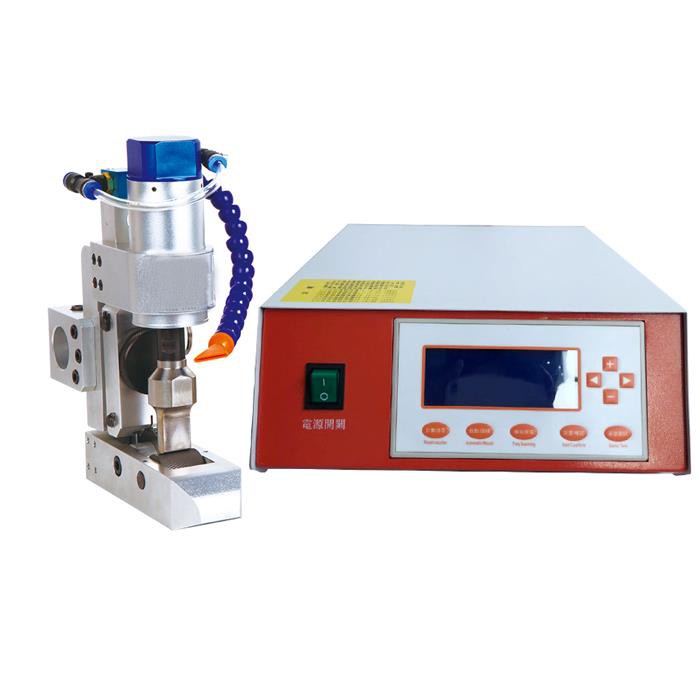
![40Khz Ultrasonic Cutting and Sealing Machine]() 40Khz Ultrasonic Cutting and Sealing MachineUltrasonic cutting and sealing machine consists of the ultrasonic generator and host(welding and cutting) two parts with high frequency ultrasonic vibration, first welding fabric, then cut the edgeread more
40Khz Ultrasonic Cutting and Sealing MachineUltrasonic cutting and sealing machine consists of the ultrasonic generator and host(welding and cutting) two parts with high frequency ultrasonic vibration, first welding fabric, then cut the edgeread more -
![20Khz Ultrasonic Cutting and Sealing Machine]() 20Khz Ultrasonic Cutting and Sealing MachineUltrasonic cutting and sealing machine consists of the ultrasonic generator and host(welding and cutting) two parts with high frequency ultrasonic vibration, first welding fabric, then cut the edgeread more
20Khz Ultrasonic Cutting and Sealing MachineUltrasonic cutting and sealing machine consists of the ultrasonic generator and host(welding and cutting) two parts with high frequency ultrasonic vibration, first welding fabric, then cut the edgeread more -
![Ultrasonic Fabric Cutting and Sealing Machine]() Ultrasonic Fabric Cutting and Sealing Machinecompact equipment very easy and fast(2mn) to adjust mechanically and to use;read more
Ultrasonic Fabric Cutting and Sealing Machinecompact equipment very easy and fast(2mn) to adjust mechanically and to use;read more
safety of product slitting by detection of non-slitting and detection of sonotrode rising;
Very easy...


Welding the fabric or film while cutting together, high efficiency and low power consumption.
What is Ultrasonic Cutting Edge Sealing Machine
An Ultrasonic Cutting Edge Sealing Machine is a device that uses high-frequency ultrasonic vibrations to cut and seal materials simultaneously. This technology is particularly useful in the packaging industry, where it provides an efficient method for sealing packages while also cutting them to the desired size.
Parts of Ultrasonic Cutting Edge Sealing Machine
Ultrasonic Transducer
It is essentially an energy conversion device that converts incoming electrical energy into mechanical energy or ultrasound. It is represented by a transducer stretching back and forth vertically. The frequency of the telescopic motion is the same as the frequency of the high-frequency AC supplied by the generator.
Booster
The function of the booster is to fix the whole ultrasonic vibration system and enlarge the output amplitude of the transducer.
Cutter
The cutter on the one hand further amplifies the amplitude and focuses on the ultrasonic wave. On the other hand, the output of the ultrasonic wave, and the ultrasonic energy is concentrated into the cutting part of the cut material by using a similar cutting edge of the cutting knife. Under the action of huge ultrasonic energy, this part immediately softens, melts, and the strength drops greatly. At this point, as long as a small cutting force is applied, the purpose of cutting materials can be achieved.
Generator
Converts the power supply into high frequency and high voltage AC and transmits it to the ultrasonic transducer.
Working Principle of Ultrasonic Cutting Edge Sealing Machine
Electrical Input
The machine is powered by an electrical supply that provides the necessary voltage and current.
Transducer Conversion
The electrical energy is supplied to an ultrasonic transducer, which is made of piezoelectric materials. These materials have the unique property of changing shape when an electric field is applied to them. As a result, when an alternating current (AC) passes through the transducer, it causes the piezoelectric crystals within it to oscillate at a high frequency, typically in the range of 20 kHz to 60 kHz.
Booster Amplification
The oscillations from the transducer are passed to a booster or an amplifier, which increases the amplitude of the vibrations. This step is important because the effectiveness of cutting and sealing depends on the amount of energy delivered to the material.
Material Interaction
The vibrating horn contacts the material at the intended cutting or sealing location. The high-frequency vibrations create friction between the horn and the material, generating localized heat due to the rapid movement of molecules.
Cutting Action
For cutting, the heat generated by the friction causes the material to soften or melt slightly, allowing the sharp edge of the horn to penetrate and slice through the material without the need for a blade. This process results in clean cuts with minimal material deformation and heat-affected zones.
Sealing Action
In sealing applications, the heat and pressure from the horn cause the edges of the material to fuse together. The ultrasonic waves create molecular entanglement and frictional heating, leading to the formation of a strong bond. This bond is typically achieved by applying pressure along with the ultrasonic energy, ensuring that the edges are properly welded together.
Control and Adjustment
Ultrasonic cutting edge sealing machines are often equipped with control systems that allow operators to adjust various parameters, such as amplitude, frequency, and dwell time, to suit the specific requirements of different materials and applications. This ensures precision and consistency in the cutting and sealing processes.
How to Choose Ultrasonic Cutting Edge Sealing Machine
Material Compatibility
Determine the type of material you will be processing. Different materials require different frequencies and amplitudes for optimal cutting and sealing results. Make sure the machine can handle the material's physical properties, such as thickness, density, and melting point.
Cutting and Sealing Requirements
Evaluate the specific cutting and sealing tasks. Consider the size, shape, and complexity of the parts you need to produce. Look for machines that offer adjustable amplitude, frequency, and pressure settings to meet different requirements.
Ease of Use and Control
Consider the machine's user interface and control system. Machines with intuitive controls and easy-to-navigate menus can simplify operation and reduce setup time. Also, check if the machine offers remote control capabilities for added flexibility.
Machine Capacity
Evaluate the machine's capacity based on speed, throughput, and maximum material size. Choose a machine that can handle your production volume and workpiece size.
Precision and Consistency
Look for a machine that provides consistent and precise results. A high-quality ultrasonic machine should maintain uniform cutting and sealing performance across different cycles and materials.
Safety Features
Make sure the machine is equipped with adequate safety features, such as emergency stop buttons, guards, and lockout/tagout capabilities. These features help prevent accidents and injuries during operation.
How to Maintain Ultrasonic Cutting Edge Sealing Machine
Daily Cleaning
During the use of the sealing machine, the dust and stains on the surface of the equipment should be cleaned regularly, especially when the processing environment is relatively harsh, the cleaning frequency should be increased. When cleaning, first turn off the power and use a soft cloth or brush to remove dust and stains on the surface. And clean the rubber pad and the dust-prone areas inside the sealing machine. To prevent water from entering the sealing machine, it is best to wipe with a clean soft brush, and it is not advisable to use cleaning agents.

Lubrication and Maintenance
All parts of the sealing machine should be regularly coated with lubricating oil or grease to ensure smooth operation. The operating nature, ambient temperature and mechanical quality of the sealing machine are all important factors affecting lubrication; and the selection of lubricating oil for the sealing machine should be reasonable. According to the use conditions and the working requirements of the machine, choose the appropriate lubricating oil, and do not change it at will. Check the oil quantity and quality of the lubricating oil frequently to avoid equipment failure due to poor lubrication.

Maintenance and Repair
The sealing machine needs periodic inspection and maintenance, and the air circuit should be checked and cleaned regularly to prevent the air circuit from being blocked and affecting normal use. For wearing parts, such as cutters and cylinders, they should be replaced regularly to avoid affecting normal work. And when the sealing machine fails, it needs to be stopped immediately for maintenance.
Frequently Asked Questions
We're well-known as one of the leading ultrasonic cutting edge sealing machine manufacturers and suppliers in China. Please feel free to buy high quality ultrasonic cutting edge sealing machine at competitive price from our factory. Contact us for more details.