


Ultrasonic Transducer

Shanghai Huashuo: Your Professional Ultrasonic Transducer Manufacturer!
Shanghai Huashuo Intelligent Equipment Co., Ltd. s a company specializing in the production and processing of automation machinery, mechanical accessories and other products. Our company has had technical exchanges and cooperation with many German-funded enterprises at the beginning of its establishment. By combining German advanced technology and scientific management mode, it has formed a complete R&D, assembly, testing, and marketing system.
Our Advantages
Various Products
Our company provides High Shear Disperser, Emulsifier, Homogenizer, Colloid mill, Powder-liquid mixer, Grinding machine, Vacuum Emulsifier, Ultrasonic Disperser, Ultrasonic Welding, Ultrasonic Cutting, Ultrasonic Homogenizer, Ultrasonic Emulsifier, Ultrasonic Transducer, Ultrasonic Generator, Ultrasonic Milling Machine.
Advanced Equipment
Our company has advanced production equipment including CNC lathe, CNC milling machine, Polytec laser doppler vibrometer and Resistance furnace temperature controller, which has a high level of automation and intelligence.
Product Application
Dye dispersion, food homogenization, ink dispersion, oil-water emulsification, graphene dispersion, graphene preparation, alumina dispersion, metal melt refinement, ultrasonic dispersion, ultrasonic homogenization, ultrasonic emulsification, non-woven fabric welding, PP/PE Welding and cutting, food cutting and processing, ultrasonic auxiliary equipment.
Integrated Process Technology
Our company provides customers with complete process technology solutions, ultrasonic welding, ultrasonic dispersion and other ultrasonic equipment and supporting processes, including grinding, emulsification, dispersion, homogenization, stirring, mixing, Drying, cooling, ultrasonic dispersion, extraction, emulsification, welding, cutting, testing and other processes.
-
![15KHz 20KHz Ultrasonic Welding Transducer For Nonwoven Face Mask Welding]() 15KHz 20KHz Ultrasonic Welding Transducer For Nonwoven Fa...15KHz 20KHz Ultrasonic Welding Transducer With Control Supply Generator For Nonwoven Face Mask Welding Machineread more
15KHz 20KHz Ultrasonic Welding Transducer For Nonwoven Fa...15KHz 20KHz Ultrasonic Welding Transducer With Control Supply Generator For Nonwoven Face Mask Welding Machineread more -
![4200W Ultrasonic Transducer Converter 15K Low Frequency Ultrasound Plastic Welding Transducer]() 4200W Ultrasonic Transducer Converter 15K Low Frequency U...The 15khz ultrasonic high frequency transducer ,it is in good heat resistasnce, can be used in a wide range of temperature with long. Once assembled, the transducer are aged before testing and...read more
4200W Ultrasonic Transducer Converter 15K Low Frequency U...The 15khz ultrasonic high frequency transducer ,it is in good heat resistasnce, can be used in a wide range of temperature with long. Once assembled, the transducer are aged before testing and...read more -
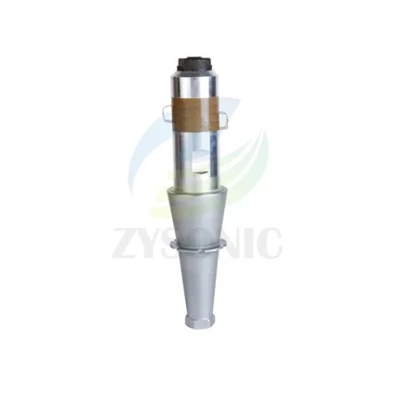
![15khz Ultrasonic Welding Transducer With Booster]() 15khz Ultrasonic Welding Transducer With BoosterThe 15khz ultrasonic high frequency transducer ,it is in good heat resistasnce, can be used in a wide range of temperature with long. Once assembled, the transducer are aged before testing and...read more
15khz Ultrasonic Welding Transducer With BoosterThe 15khz ultrasonic high frequency transducer ,it is in good heat resistasnce, can be used in a wide range of temperature with long. Once assembled, the transducer are aged before testing and...read more -
![Ultrasonic Plastic Welding Transducer With Booster]() Ultrasonic Plastic Welding Transducer With Boosterprinciple The ultrasonic vibrator is composed of an ultrasonic transducer and an ultrasonic horn to form an ultrasonic vibration system. Ultrasonic transducer is a device that can convert...read more
Ultrasonic Plastic Welding Transducer With Boosterprinciple The ultrasonic vibrator is composed of an ultrasonic transducer and an ultrasonic horn to form an ultrasonic vibration system. Ultrasonic transducer is a device that can convert...read more -
![Ultrasonic Welding And Cutting Blade For Non-Woven Fabric Products]() Ultrasonic Welding And Cutting Blade For Non-Woven Fabric...Description: The function of the ultrasonic transducer is to convert the input electrical power into mechanical power (ultrasonic waves) and then pass it out, while consuming a small portion of...read more
Ultrasonic Welding And Cutting Blade For Non-Woven Fabric...Description: The function of the ultrasonic transducer is to convert the input electrical power into mechanical power (ultrasonic waves) and then pass it out, while consuming a small portion of...read more -
![Ultrasonic Piezoelectric Transducer]() Ultrasonic Piezoelectric TransducerThe transducer converts high-frequency electrical energy into high-frequency mechanical vibrations. And it contains several piezoelectric ceramic discs sandwiched under pressure between two metal...read more
Ultrasonic Piezoelectric TransducerThe transducer converts high-frequency electrical energy into high-frequency mechanical vibrations. And it contains several piezoelectric ceramic discs sandwiched under pressure between two metal...read more -
![Ultrasonic Welding Transducer]() Ultrasonic Welding TransducerThis Ultrasonic Green Booster was also acquired from an estate sale. There is visual evidence of it being mounted at least once.read more
Ultrasonic Welding TransducerThis Ultrasonic Green Booster was also acquired from an estate sale. There is visual evidence of it being mounted at least once.read more -
![Ultrasonic Piezo Transducer]() Ultrasonic Piezo TransducerUltrasonic vibrator, also known as ultrasonic vibrator, the industry after the transducer and the horn connected to the whole is called the vibrator.read more
Ultrasonic Piezo TransducerUltrasonic vibrator, also known as ultrasonic vibrator, the industry after the transducer and the horn connected to the whole is called the vibrator.read more -
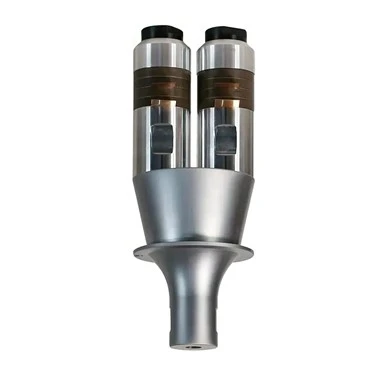
![High Power Ultrasonic Welding Transducer]() High Power Ultrasonic Welding TransducerDouble Head Ultrasonic Transducers with booster, two transducers with one booster, can offer the bigger power than usual ones, widely used in plastic welding, fiber welding and cutting machine.read more
High Power Ultrasonic Welding TransducerDouble Head Ultrasonic Transducers with booster, two transducers with one booster, can offer the bigger power than usual ones, widely used in plastic welding, fiber welding and cutting machine.read more -
![High Power Ultrasonic Transducer]() High Power Ultrasonic TransducerUltrasonic transducer is a device that converts electric energy, mechanical energy or sound energy from one form of energy to another form of energy, called transducer, also known as active sensor.read more
High Power Ultrasonic TransducerUltrasonic transducer is a device that converts electric energy, mechanical energy or sound energy from one form of energy to another form of energy, called transducer, also known as active sensor.read more -
![Ultrasonic Converter]()



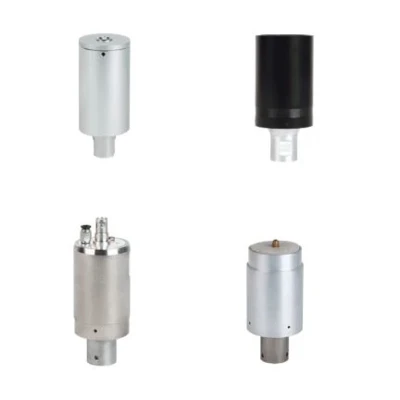

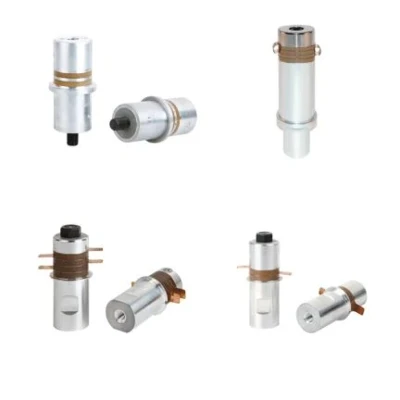


Between 15khz to 70khz, 100w to 4200w, used for weld, cut and sonochemistry, the core parts of the ultrasonic work.
Introduction to Ultrasonic Transducer
An ultrasonic transducer is a device used to convert some other type of energy into an ultrasonic vibration. There are several basic types, classified by the energy source and by the medium into which the waves are being generated. Mechanical devices include gas-driven, or pneumatic, transducers such as whistles as well as liquid-driven transducers such as hydrodynamic oscillators and vibrating blades.
Components of Ultrasonic Transducer
The Piezoelectric Crystal
The center of the ultrasonic transducer is introduced as the ‘active ingredient’ of the system. It tolerates rarefactions and compressions in order to transform the electrical energy into ultrasonic energy or contrariwise. A fault detector is another instrument utilized to produce the electrical pulse, which then conveys to the transducer.
The Backing
It is a very dense substance, which is also too fundamental. The exclusive target of this is to absorb the energy that emits from the back of the crystal to monitor the vibrations. An excellent accuracy transducer can be constructed by controlling the acoustic impedance of the backing substance of the crystal. If the backing material is transformed, the difference in this acoustic impedance can be modified. This will certainly influence the transducers as the resolution may change much higher.
Wear-plate
A wear plate is set in the ultrasonic transducer to support the piezoelectric crystal in different applications. The environmental problems are that it protects the ultrasonic transducer from usually wear and tear and corrosion. The wear plate generally operates as an acoustic converter between the crystal and water, wedge, or delay line.
Dual Element Transducers
A dual element transducer consists of two crystal elements housed in the same case, separated by an acoustic barrier. One element generates sound waves, and the other element acts as a receiver.
Here’s how it works: the two elements are angled toward each other to create a V-shaped sound path in the test material. Essentially, the transmit and receive beams cross under the examination surface. This creates a pseudo-focus effect, which enhances resolution in the focal zone.
The increased sensitivity from the pseudo-focus effect is particularly helpful for examining parts with rough backwall surfaces—making these transducers the industry standard for measuring remaining wall thickness in corrosion applications.
Contact Transducers
As the name implies, a contact transducer is used for direct contact inspections. This single element transducer has a wear-resistant surface optimized for contact with most metals—making it durable for use in rugged industrial environments.
This transducer type is available in a variety of styles and configurations, such as fingertip for difficult-to-access areas.
Angle Beam Transducers
An angle beam transducer is a single element transducer used with a wedge to introduce a refracted shear wave or longitudinal wave into a test piece. The removable or integral wedge introduces sound at an angle into the part.
Inspectors commonly use angle beam transducers to test weld integrity, because weld inspection requires you to aim sound waves at an angle. Other common industrial applications include flaw detection and crack sizing techniques.
Wedges come in a variety of sizes to meet specific needs. For instance, some wedges offer a shorter approach distance while others are suited for high-temperature applications. You can also customize select wedges to create nonstandard refracted angles and contours.
Delay Line Transducers
A delay line transducer is a single element transducer designed for use with a replaceable delay line. As the name suggests, this transducer introduces a time delay between the generation of the sound wave and the arrival of the reflected waves, helping to improve the near-surface resolution.
The higher transducer frequency is ideal for inspecting or measuring thin materials, as well as locating small flaws while using the direct contact method. With the replaceable delay line, this transducer is well-suited for a variety of industrial applications.
Immersion Transducers
An immersion transducer is a single element transducer designed to operate in water. Rather than making direct contact with a test piece, these transducers use a column or bath of water to couple sound energy into the material.
The immersion technique enables uniform, fast coupling so inspectors can quickly scan parts. Inspectors can choose focused transducers to increase sensitivity and performance in a specific area of a part.
Immersion transducers are often used for in-line or in-process tests on moving parts, automated scanning, and optimizing sound coupling into sharp radiuses, grooves, or channels in test pieces with complex geometry.
Application of Ultrasonic Transducer

Role in Measurement and Control Systems
Ultrasonic transducers are fundamental components in measurement and control systems, enabling accurate monitoring and regulation of physical parameters such as temperature, pressure, and flow rate. In industrial settings, transducers ensure precise control of processes, leading to enhanced productivity and quality assurance.

Aerospace and Defence Applications
Ultrasonic transducers are vital components in aerospace and defence systems, ensuring reliable operation under extreme conditions. In aircraft, transducers monitor engine performance, altitude, and airspeed, while in defence applications, they facilitate surveillance, target tracking, and missile guidance.

Contribution to Medical Technology
In the medical field, ultrasonic transducers play a critical role in diagnostic imaging techniques like ultrasound, MRI, and CT scans. Transducer-based sensors enable non-invasive monitoring of vital signs such as heart rate, blood pressure, and oxygen saturation, facilitating early detection of health conditions and guiding medical interventions.

Environmental Monitoring and Research
Ultrasonic transducers play a crucial role in environmental monitoring and research, enabling the collection of data on air quality, water pollution, and climate change. Weather stations use transducers to measure temperature, humidity, and atmospheric pressure, while sensors deployed in oceans and forests monitor ecosystem health and biodiversity.
Factors To Consider When Choosing Ultrasonic Transducer
Material Type
Different types of materials transmit ultrasonic sound waves in different ways. Some materials such as metals, glass, and ceramics, which are used in many engineering applications are efficient ultrasound transmitters and can be measured easily no matter the thickness of the materials. Moreover, some composites such as rubber and fiberglass are more attenuating and will need you to use transducers with lower frequencies and high penetration. Other materials like plastics have a limited maximum thickness range because they absorb ultrasonic energy quicker, but ultrasonic testing can still be done on them efficiently in industrial settings.
Defects Type
Generally, ultrasonic testing can detect more defects than other kinds of material testing. But this does not come automatically. The type of transducer used in UT greatly affects the kind of information that the technician gets after testing.
Some probes are able to detect even the small and hard-to-find flaws such as the phased array transducers. While some other probes are only able to detect obvious surface and subsurface abnormalities.
Frequency
The probe frequency is an important factor that affects the accuracy of test results in ultrasonic testing. Most ultrasonic transducers have frequencies that range from 0.1MHz to 15MHz, while some can be customized up to 50MHz frequency, for special precision testing. Low frequencies are ideal for measuring thick components while higher frequencies are good for thinner materials.
Crystal Diameter
A bigger crystal diameter results in lower frequencies, and high sensitivity, while a smaller crystal diameter leads to high frequencies and less sensitivity. You can choose a crystal diameter size depending on the kind of UT data you are interested in. Transducer crystal diameters vary depending on the type of transducer. For example, in array transducers, while you might be confused by the overall sizable diameter, it is a probe that comprised several small diameter crystals in one.
The Thickness Of Test Parts
Most ultrasonic testing instruments work efficiently on any size/ thickness of the material, it all comes down to the kind of transducer that is used for measurement. As mentioned, lower frequency transducers are ideal for measuring thick test parts and high frequencies are ideal for thinner parts. On some rare occasions, you might need to combine several types of transducers in order to measure very thick or multiple layer materials.
The Shape Of Test Parts
The coupling effectiveness between a probe and the surface to be tested is affected by the shape of test parts. A flat surface can be scanned efficiently using either small or large diameter transducers.
However, curved surfaces like narrow pipes and components with convex and concave shapes require either special transducers such as non-contact immersion transducers or small diameter probes to get proper coupling and therefore accurate and efficient results.
The Temperature Of Test Parts
Every transducer comes with information on the minimum and maximum operational temperatures, with most of them enabling a maximum temperature of 50 degrees Celsius. Depending on your operational temperatures, choose a probe that will work efficiently. High temperatures may cause probe parts to expand and permanently damage the probe, while very low temperatures may cause it to malfunction.
FAQ
We're well-known as one of the leading ultrasonic transducer manufacturers and suppliers in China. Please feel free to buy high quality ultrasonic transducer at competitive price from our factory. Contact us for more details.