


Ultrasonic Cutting Machine

Shanghai Huashuo: Your Professional Ultrasonic Cutting Machine Manufacturer!
Shanghai Huashuo Intelligent Equipment Co., Ltd. s a company specializing in the production and processing of automation machinery, mechanical accessories and other products. Our company has had technical exchanges and cooperation with many German-funded enterprises at the beginning of its establishment. By combining German advanced technology and scientific management mode, it has formed a complete R&D, assembly, testing, and marketing system.
Our Advantages
Various Products
Our company provides High Shear Disperser, Emulsifier, Homogenizer, Colloid mill, Powder-liquid mixer, Grinding machine, Vacuum Emulsifier, Ultrasonic Disperser, Ultrasonic Welding, Ultrasonic Cutting, Ultrasonic Homogenizer, Ultrasonic Emulsifier, Ultrasonic Transducer, Ultrasonic Generator, Ultrasonic Milling Machine.
Advanced Equipment
Our company has advanced production equipment including CNC lathe, CNC milling machine, Polytec laser doppler vibrometer and Resistance furnace temperature controller, which has a high level of automation and intelligence.
Product Application
Dye dispersion, food homogenization, ink dispersion, oil-water emulsification, graphene dispersion, graphene preparation, alumina dispersion, metal melt refinement, ultrasonic dispersion, ultrasonic homogenization, ultrasonic emulsification, non-woven fabric welding, PP/PE Welding and cutting, food cutting and processing, ultrasonic auxiliary equipment.
Integrated Process Technology
Our company provides customers with complete process technology solutions, ultrasonic welding, ultrasonic dispersion and other ultrasonic equipment and supporting processes, including grinding, emulsification, dispersion, homogenization, stirring, mixing, Drying, cooling, ultrasonic dispersion, extraction, emulsification, welding, cutting, testing and other processes.
-
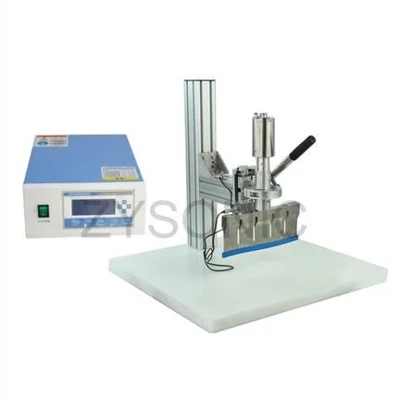
![Automatic Food Cutting Machine Ultrasonic Cutter For Cake Bakery Cutting]() Automatic Food Cutting Machine Ultrasonic Cutter For Cake...The ultrasonic food cutting machine (cutter) is composed of ultrasonic transducer (converter) with cover, booster, titanium blade and digital generator. Ultrasonic cutters can smoothly cut...read more
Automatic Food Cutting Machine Ultrasonic Cutter For Cake...The ultrasonic food cutting machine (cutter) is composed of ultrasonic transducer (converter) with cover, booster, titanium blade and digital generator. Ultrasonic cutters can smoothly cut...read more -
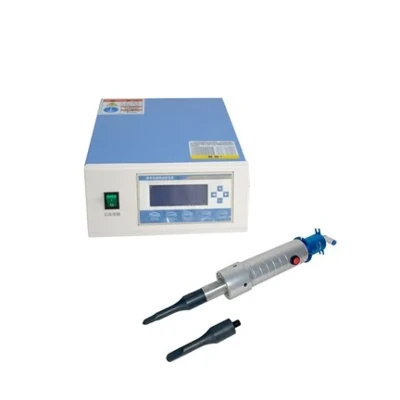
![Handheld Ultrasonic Cake Cutting Machine]() Handheld Ultrasonic Cake Cutting MachineThe ultrasonic food cutting machine (cutter) is composed of ultrasonic transducer (converter) with cover, booster, titanium blade and digital generator. Ultrasonic cutters can smoothly cut...read more
Handheld Ultrasonic Cake Cutting MachineThe ultrasonic food cutting machine (cutter) is composed of ultrasonic transducer (converter) with cover, booster, titanium blade and digital generator. Ultrasonic cutters can smoothly cut...read more -
![Ultrasonic Food Cutting And Processing Machine]() Ultrasonic Food Cutting And Processing MachineUltrasonic food processing involves ultrasonic food cutter (guillotine) to produce almost frictionless surface, so the food will not adhere or deform. Cut products cleanly, including fillings such...read more
Ultrasonic Food Cutting And Processing MachineUltrasonic food processing involves ultrasonic food cutter (guillotine) to produce almost frictionless surface, so the food will not adhere or deform. Cut products cleanly, including fillings such...read more -
![Ultrasonic Hook And Loop Roll Cutting Machine]() Ultrasonic Hook And Loop Roll Cutting Machinenew Automatic Ultrasonic pvc pp pe nylon cutting machine ultrasonic cutting tape 1.This equipment has two system,one is good at cutting the webbings (can instead of the cutting machine),the...read more
Ultrasonic Hook And Loop Roll Cutting Machinenew Automatic Ultrasonic pvc pp pe nylon cutting machine ultrasonic cutting tape 1.This equipment has two system,one is good at cutting the webbings (can instead of the cutting machine),the...read more -
![Ultrasonic Tags Trademark Cutting Machine]() Ultrasonic Tags Trademark Cutting MachineAutomatic Ultrasonic Tags Trademark Cutting Machine garment labels cutting machineread more
Ultrasonic Tags Trademark Cutting MachineAutomatic Ultrasonic Tags Trademark Cutting Machine garment labels cutting machineread more -
![High Speed Ultrasonic Strip Cutting Machine]() High Speed Ultrasonic Strip Cutting MachineUltrasonic shearing machine is the combination of ultrasonic welding technology and traditional shearing. When the ultrasonic generator is working, the ultrasonic energy is transmitted to the...read more
High Speed Ultrasonic Strip Cutting MachineUltrasonic shearing machine is the combination of ultrasonic welding technology and traditional shearing. When the ultrasonic generator is working, the ultrasonic energy is transmitted to the...read more -
![Automatic Ultrasonic Label Cutting Machine]() Automatic Ultrasonic Label Cutting MachineWorking principle of ultrasonic belt cutting machine Ultrasonic shearing machine (ultrasonic belt cutting machine) is a combination of ultrasonic fusion technology and traditional shearing. When...read more
Automatic Ultrasonic Label Cutting MachineWorking principle of ultrasonic belt cutting machine Ultrasonic shearing machine (ultrasonic belt cutting machine) is a combination of ultrasonic fusion technology and traditional shearing. When...read more -
![Ultrasonic Belt Cutting Machine]() Ultrasonic Belt Cutting MachineWorking principle of ultrasonic belt cutting machine Ultrasonic shearing machine (ultrasonic belt cutting machine) is a combination of ultrasonic fusion technology and traditional shearing....read more
Ultrasonic Belt Cutting MachineWorking principle of ultrasonic belt cutting machine Ultrasonic shearing machine (ultrasonic belt cutting machine) is a combination of ultrasonic fusion technology and traditional shearing....read more -
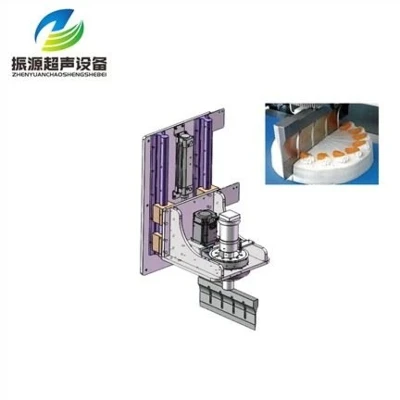
![Cream Cake Ultrasonic Cutting Machine]() Cream Cake Ultrasonic Cutting MachineUltrasonic food processing involves vibration knife to produce almost frictionless surface, which will not deform the food and will not stick to the food. Clean cut surface, including cream cake,...read more
Cream Cake Ultrasonic Cutting MachineUltrasonic food processing involves vibration knife to produce almost frictionless surface, which will not deform the food and will not stick to the food. Clean cut surface, including cream cake,...read more -
![Ultrasonic Food Cutter Ultrasonic Knife For Frozen Cakes]() Ultrasonic Food Cutter Ultrasonic Knife For Frozen CakesUltrasonic food cutting expe-riment is the role of ultrasound energy to the knife, high-frequency vibration in the ultrasonic knife between the cake and the establishment of a little surface...read more
Ultrasonic Food Cutter Ultrasonic Knife For Frozen CakesUltrasonic food cutting expe-riment is the role of ultrasound energy to the knife, high-frequency vibration in the ultrasonic knife between the cake and the establishment of a little surface...read more -
![Ultrasonic Welding And Cutting Machine]() Ultrasonic Welding And Cutting MachineThe friction resistance of the ultrasonic cutting tool is very small when it vibrates, and the material to be cut is not easy to stick to the blade. The cutting effect is obvious for frozen,...read more
Ultrasonic Welding And Cutting MachineThe friction resistance of the ultrasonic cutting tool is very small when it vibrates, and the material to be cut is not easy to stick to the blade. The cutting effect is obvious for frozen,...read more -
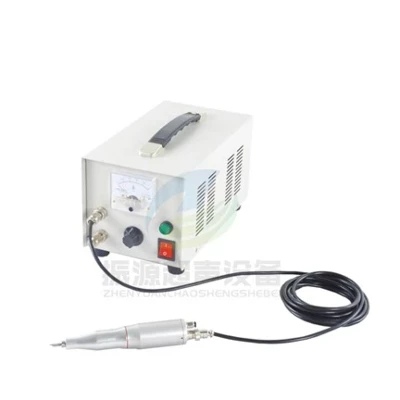
![Hand Held Ultrasonic Cutting Machine]() Hand Held Ultrasonic Cutting MachineUltrasonic cutting knife is widely used in circuit board, lamp shell, super hard plastic parts, materials requiring no burr treatment, toner clip, relay analysis, mobile phone battery, LCD panel,...read more
Hand Held Ultrasonic Cutting MachineUltrasonic cutting knife is widely used in circuit board, lamp shell, super hard plastic parts, materials requiring no burr treatment, toner clip, relay analysis, mobile phone battery, LCD panel,...read more


With the cutting blade in high frequency vibration, it can cut the plastic and rubber better than normal cutter.
Introduction to Ultrasonic Cutting Machine
Ultrasonic cutting machines are machines where the cutting blade or knife vibrates at a very high frequency. Ultrasonic cutting is a technique that uses cutting tools vibrating at high frequencies to cut through various materials. Applying ultrasonic vibration to the cutting knife creates a cutting effect with minimal friction.
Basic Parts of Ultrasonic Cutting Machine
Ultrasonic Generators
Ultrasonic Generator utilizes the 110 V AC or 220 V AC power supply electricity and turns it into a high voltage, high-frequency electricity signal. This signal is then fed to the transducers.
Ultrasonic Transducer
The ultrasonic transducer works as an ultrasonic converter. Its purpose is to take the high-frequency electrical signal and convert it into a mechanical high-frequency motion. It utilizes piezoelectric ceramic discs that expand on the application of electricity.
Transducers are completely sealed so as to avoid contact of electrical parts with water during washing.
Ultrasonic Booster
The purpose of an ultrasonic booster is to fine-tune the mechanical frequency obtained by the transducer. It also acts as a stationary intermediatory where the cutting tool can be clamped. Boosters are generally a one-piece part made of Titanium metal.
Cutting Tool
The cutting tool is also called the blade, cutting horn, or sonotrode. This tool vibrates on the high frequency provided by the booster. The most common material for the cutting tool design is Titanium since Titanium is very resonant and has high longevity.
Material Handling Equipment
Material handling equipment controls the movement of the food relative to the cutter or moves the cutter relative to the food. A good handling system is important to create precise cuts at the right location.
Advantages of Ultrasonic Cutting Machine
Precision Cutting
Ultrasonic cutting machine provides extremely precise cuts with clean edges. This precision is crucial in industries where accuracy and product quality are essential, such as food, textiles, and electronics manufacturing.
Clean Cuts
Ultrasonic cutting machine minimizes debris and fraying, resulting in clean and neat cut edges. This is particularly important in applications where aesthetics and product presentation matter.
Reduced Material Deformation
The low contact pressure of ultrasonic cutting machine reduces material deformation, making it suitable for delicate materials, soft substances, and fragile products. It minimizes compression and distortion of the material being cut.
No Tool Wear
Unlike traditional cutting tools like knives or blades, ultrasonic cutting machines experience minimal wear and require less frequent replacement, leading to cost savings and reduced downtime.
Reduced Contamination
In food and pharmaceutical applications, ultrasonic cutting machine prevents contamination because there is no direct contact between the cutting tool and the product. This helps maintain product hygiene.
Versatility
Ultrasonic cutting machines can be used with a wide range of materials, including plastics, textiles, rubber, composites, and food products. It is suitable for both soft and rigid materials.
High Speed
Ultrasonic cutting machines can be automated and integrated into production lines, allowing for rapid, continuous cutting processes. This improves production efficiency.
No Heat Generation
Ultrasonic cutting machine generates localized heat at the cutting point, but it does not transfer significant heat to the surrounding material. This is advantageous for heat-sensitive materials.
Sealing Capabilities
Ultrasonic cutting machines can simultaneously seal the cut edges of certain materials, preventing fraying or unraveling. This is useful in textiles, fabrics, and synthetic materials.
Reduced Operator Fatigue
In manual applications, ultrasonic cutting machines are often lightweight and easy to handle, reducing operator fatigue and the risk of repetitive strain injuries.
Minimal Dust and Fumes
Ultrasonic cutting machine produces fewer dust particles and fumes compared to some other cutting methods, contributing to a cleaner and safer working environment.
Improved Productivity
The combination of precision, speed, and reduced waste results in improved overall productivity and reduced production costs.
Customizable Blades
Ultrasonic cutting blades can be customized to suit the specific requirements of different materials and cutting applications, allowing for versatility in production.
Tips For Using Ultrasonic Cutting Machine In Food Industry

Understanding The Optimal Cutting Parameters
Familiarize yourself with the recommended cutting parameters for different food products. Factors such as cutting speed, amplitude, and blade selection can significantly impact cutting efficiency and quality. Consult the ultrasonic cutting machine’s manual or seek guidance from the manufacturer to determine the ideal settings for each food type.

Proper Handling And Positioning Of Food Items
Ensure that the food items are positioned correctly on the cutting platform to achieve precise and consistent cuts. Securely hold or fix the food item to prevent movement during cutting, which can result in uneven cuts or loss of shape. Maintaining a stable position ensures clean and accurate cutting.

Adjusting Cutting Speed And Amplitude Based On Food Properties
Different food items have varying textures and densities, requiring adjustments in cutting speed and amplitude. Softer or delicate foods may require lower cutting speeds and reduced amplitude to prevent damage, while denser or tougher foods may benefit from higher cutting speeds and increased amplitude for efficient cutting.

Utilizing Different Cutting Techniques For Various Food Types
Explore and experiment with different cutting techniques to optimize results for specific food types. For example, some foods may benefit from a straight slicing motion, while others may require a sawing or oscillating motion. Understanding the best technique for each food item can enhance cutting efficiency and produce desired outcomes.
FAQ
We're well-known as one of the leading ultrasonic cutting machine manufacturers and suppliers in China. Please feel free to buy high quality ultrasonic cutting machine at competitive price from our factory. Contact us for more details.