


The principle of an ultrasonic cutter is completely different from that of a conventional one. It uses the energy of ultrasonic waves to melt the local heating of the material to be cut, so as to achieve the purpose of cutting the material. Therefore, the ultrasonic cutting does not require a sharp cutting edge, nor does it require a large pressure, and does not cause chipping or breakage of the material to be cut.
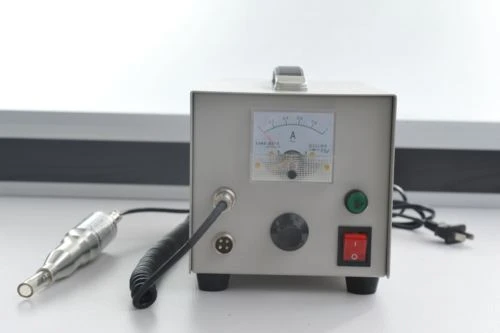
At the same time, since the cutting blade is subjected to ultrasonic vibration, the frictional resistance is particularly small, and the material to be cut is not easily adhered to the blade. This is particularly effective for cutting viscous and elastic materials, frozen materials such as food, rubber, etc., or objects that are inconvenient to apply pressure.
Ultrasonic cutting also has a great advantage in that it has a fusion at the cutting point while cutting. The cutting site is perfectly sealed to prevent loose tissue (such as textile material flash). The use of ultrasonic cutting machines can also be extended, such as digging holes, shovel digging, scraping paint, engraving, slitting and so on.
Ultrasonic cutting method:
Tool type: The ultrasonic wave is applied to the cutting tool to make the tool generate ultrasonic vibration, which is the cutting effect.
Chopping anvil: The ultrasonic vibration is applied to the cutting bottom mold. This bottom mold is like the cutting board used in life. The ultrasonic vibration of the cutting board can also be used for cutting. The cutting tool does not need to be changed. Ordinary tools can be used.
Two cutting methods are available for different process conditions and cutting objects.
Application range
Used for cutting rubber, synthetic fabrics, fabrics, plastics, metal sheets, food, etc.
principle
The principle of ultrasonic cutting is completely different from the cutting in the traditional sense. Ultrasonic cutting uses the energy of ultrasonic waves to melt the localized heat of the material to be cut, thereby achieving the purpose of cutting the material. Therefore, the ultrasonic cutting does not require a sharp cutting edge, nor does it require a large pressure, and does not cause chipping or breakage of the material to be cut. At the same time, since the cutting blade is subjected to ultrasonic vibration, the frictional resistance is particularly small, and the material to be cut is not easily adhered to the blade. This is particularly effective for cutting viscous and elastic materials, frozen materials such as food, rubber, etc., or objects that are inconvenient to apply pressure.
Ultrasonic cutting also has a great advantage in that it has a fusion of the cutting part while cutting. It has an edge-sealing effect to prevent the looseness of the material being cut.
The use of ultrasonic cutting machines can also be extended, such as digging holes, shovel digging, scraping paint, engraving, slitting and so on.