Ultrasonic graphene dispersion
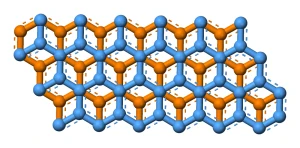
Graphene is a thin and hard two-dimensional material composed of a single layer of carbon atoms. It has very good strength, flexibility, electrical conductivity, thermal conductivity and optical properties, and plays an important role in various fields. The absence of a single-layer graphene material in a natural state generally exists in three-dimensional graphite, and it is very important to extract a single-layer graphene in graphite.
Ultrasonic graphene dispersion is also called ultrasonic graphene stripping. The use of graphite oxide reduction method combined with ultrasonic vibration can effectively increase the spacing of graphite oxide layers. Graphite oxide with large interlayer spacing is not only beneficial to the formation of graphite oxide between other molecules, atoms and other intercalation layers. Intercalation of composite materials, and easy to be stripped into a single layer of graphite oxide, to lay the foundation for the further preparation of single-layer graphene.
Principle of ultrasonic dispersion
Ultrasonic graphene dispersion is the use of cavitation of ultrasonic waves to disperse agglomerated particles. It is to place the desired particle suspension (liquid) into a super-strong sound field and treat it with appropriate ultrasonic amplitude. Under the additional effects of cavitation effect, high temperature, high pressure, micro jet, strong vibration, etc., the distance between molecules will increase, eventually leading to molecular fragmentation and formation of a single molecular structure. This product has a good effect especially for dispersing nanomaterials such as carbon nanotubes, graphene, silica, and the like.
A large amount of graphite material exists in nature, and a graphite having a thickness of 1 mm contains approximately 3 million layers of graphene. The single-layer graphite is called graphene, and the material is not present in a free state, and is present in the form of a multilayer graphene-laminated graphite sheet. Since the interlayer force of the graphite sheet is weak, the layer peeling can be performed by an external force, thereby obtaining a single-layer graphene having a thickness of only one carbon atom.