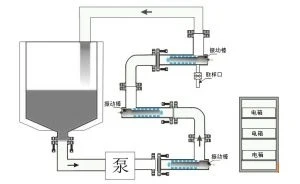
Ultrasonic disperser / ultrasonic dispersion system / ultrasonic graphene dispersion equipment
Graphene is the thinnest and hardest two-dimensional material in the world composed of single-layer carbon atoms. It has very good strength, flexibility, electrical conductivity, thermal conductivity and optical properties, and plays an important role in various fields. There is no single-layer graphene in the natural state, and the material generally exists in three-dimensional graphite. It is very important to extract single-layer graphene from graphite.
Ultrasonic graphene dispersion is also called ultrasonic graphene stripping. The graphite oxide reduction method combined with ultrasonic vibration can effectively improve the graphite oxide layer spacing. Graphite oxide with large layer spacing is not only conducive to the insertion of other molecules and atoms into the layers to form graphite oxide Intercalation Composites, but also easy to be stripped into single-layer graphite oxide, It lays a foundation for the further preparation of monolayer graphene.
Ultrasonic dispersion principle
Ultrasonic disperser / ultrasonic dispersion system / ultrasonic graphene dispersion equipment uses ultrasonic cavitation to disperse agglomerated particles. It is to put the particle suspension (liquid) to be treated into the sound field and treat it with appropriate ultrasonic amplitude. Under the additional effects such as cavitation effect, high temperature, high pressure, micro jet and strong vibration, the distance between molecules will continue to increase, which will eventually lead to molecular fragmentation and the formation of single molecular structure. The product is especially effective for dispersing nano materials (such as carbon nanotubes, graphene, silica, etc.).
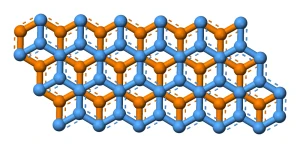
There are a large number of graphite materials in nature. Graphite with a thickness of 1 mm contains about 3 million layers of graphene. Single layer graphite is called graphene, which does not exist in the free state, and exists in the form of graphite sheets stacked with multi-layer graphene. Because the interlayer force of graphite sheet is weak, it can be stripped layer by layer by external force, so as to obtain a single-layer graphene with only one carbon atom thickness.
Common dispersion methods
1. Micro mechanical stripping method
The graphene sheet is directly peeled off from the larger crystal with tape, and the process is repeated continuously.
When a material is used to rub with expanded or defective pyrolytic graphite, flocculent crystals will be produced on the surface of bulk graphite, and the flocculent crystals contain single-layer graphene.
Disadvantages: graphene has low output, small area, difficult to control size, low efficiency and cannot be prepared on a large scale.
2. Chemical vapor deposition
The process of introducing one or more carbonaceous gaseous substances (usually low-carbon organic gas) into a vacuum reactor, decomposing and carbonizing the carbonaceous gas (usually low-carbon organic gas) through high temperature, and growing a carbon substance on the surface of the substrate.
Disadvantages: the hexagonal honeycomb crystal structure of graphene can not be completely graphitized, and the quality is not as good as that of microcomputer stripping method. The high cost and harsh equipment requirements limit the large-scale preparation of graphene, and the catalyst needs to be added to reduce the purity of graphene.
3. Crystal epitaxial oriented growth method
One is to remove Si by heating single crystal 6h SiC, so as to epitaxially grow graphene on the surface of SiC crystal. Graphene is in contact with Si layer, and the conductivity of this graphene is affected by the substrate; The other is to use the trace carbon component in the metal single crystal to precipitate graphene on the surface of the metal single crystal by annealing at high temperature under ultra-high vacuum.
Disadvantages: the thickness of graphene film is uneven and difficult to control. The generated graphene is tightly adhered to the substrate and difficult to peel off, which will affect the characteristics of graphene. At the same time, it needs to grow under the conditions of ultra vacuum and high temperature. The conditions are extremely harsh and the equipment requirements are high. It is impossible to realize large-scale and controllable preparation of graphene.
4. Graphite oxide reduction method
Graphene oxide is generally obtained from the oxidation of graphite by strong acid. There are three main methods to prepare graphite oxide: Brodie method, staudenmaier method and Hummers method. In Hummers method, the dispersion of graphene needs ultrasonic assistance.
Features: Hummers method graphene dispersion: simple method, short time-consuming, large processing capacity, safe and pollution-free. It is the most commonly used one at present.
5. Ultrasonic assisted method
Ultrasonic graphene dispersion system uses ultrasonic assisted Hummers method to prepare graphene oxide. It takes liquid as the medium and adds high-frequency ultrasonic vibration to the liquid. Because ultrasound is a mechanical wave, it is not absorbed by molecules and causes molecular vibration in the process of propagation. Under the cavitation effect, that is, under the additional effects of high temperature, high pressure, micro jet and strong vibration, the distance between molecules increases its average distance due to vibration, which eventually leads to molecular fragmentation. The graphite oxide layer spacing can be improved more effectively, and the layer spacing of the obtained graphite oxide tends to expand with the increase of ultrasonic power.
The pressure released by ultrasonic wave destroys the van der Waals force between graphene layers, making graphene more difficult to agglomerate. Graphite oxide with large layer spacing is not only conducive to the insertion of other molecules and atoms into the layers to form graphite oxide Intercalation Composites, but also easy to be stripped into single-layer graphite oxide, which lays a foundation for the further preparation of single-layer graphene.