


The physical properties of the liquid play a central role in any atomization process. Factors such as viscosity, solid content, composition of mixed solution and liquid fluidity are factors.
Pressure nozzles, whether hydraulic or pneumatic, are generally unsatisfactory for abrasive materials or materials that tend to block holes in the nozzle. In addition, it is usually necessary to operate the nozzle at high pressure, which will cause over injection and material loss.
Compared with pressure nozzle, ultrasonic nozzle has many advantages, but still has technical limitations. Some of these advantages include gentle low-speed spray, controllable spray range, extensive spray forming capability and no clogging. The limitation of ultrasonic technology is usually the type of liquid.
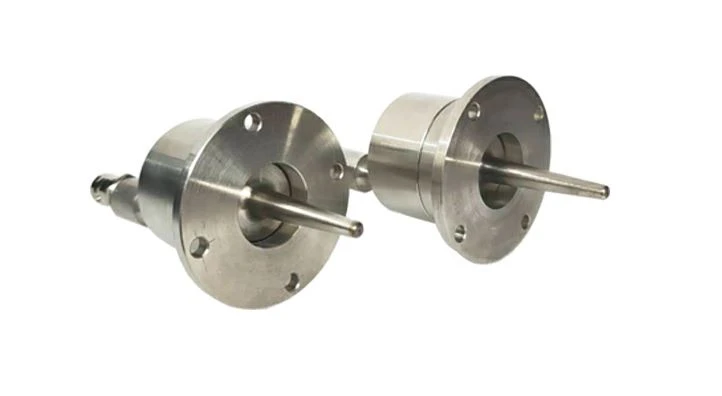
https://www.zysonic.com/ultrasonic-spray-nozzle/50khz-ultrasonic-spray-atomizer.html
Liquids are classified as follows:
1.Pure one component liquid (water, alcohol, etc.)
2.Aqueous solution (brine, alcohol / water, 10% KOH aqueous solution, etc.)
3.Solid mixtures (powder / aqueous solution, polymer / water, silica / ethanol, etc.)
The principle applicable to most materials is that the higher the viscosity or solid content of the liquid, the lower the velocity at which a given nozzle can atomize. Although the power and frequency of ultrasonic wave are adjustable, it can not achieve the ideal effect for the liquid with high viscosity and high solid content.
1. For pure liquid, the limiting factor of ultrasonic atomization ability is viscosity. In general, the upper limit of viscosity is about 100 CPS. As the viscosity decreases, the flow rate increases accordingly.
2. Aqueous solution, in most cases, the limiting factor is also viscosity. But when the solution contains very long chain polymer molecules, the results may be different. This molecule can inhibit the formation of discrete droplets, because the polymeric molecules may polymerize two to three droplets.
3. Solid mixture. There are three main factors affecting atomization: particle size, solid concentration and dynamic relationship between solid and carrier.
Granularity is a key parameter. In general, if the range of particle size exceeds one tenth of the median drop diameter, the mixture will not atomize properly. For a droplet containing one or more solid particles, its size is significantly larger than that of the solid particles embedded in it. If this is not the case, the droplets formed by atomization will probably not contain solid components, and the solid components will separate from the carrier, agglomerate on the atomized surface area and eventually fall in the form of agglomerates.
The concentration of solid in the mixture is an important factor for atomization. Even if the particle size is appropriate, other factors, such as the viscosity of the carrier and the ability of the solid component to remain suspended, also play a role in atomizability. Therefore, there is no clear guideline to establish the relationship between atomization and solid concentration. According to our experience, the actual upper limit of solid concentration is about 40%.